Aether Drift shipped 3 days after the global pandemic lockdown. It reached 10,000 players in a week.
This wasn't a lucky break. It was the result of a disciplined process: prototyping with limited inputs, testing with remote players, and solving for platform constraints before writing a single line of production code. This page reveals the mechanics and visual style that make our portfolio unique.
We Build Worlds, Not Just Screens
Every tap, swipe, and vibration is a deliberate design choice. Our portfolio shares a core philosophy: mechanics must feel native to the world, and visual style must serve the gameplay—not compete with it.
Core Mechanic Specializations
- • Procedural Generation Systems
- • Tactile Physics & Haptics
- • Diegetic UI Integration
- • Narrative-Driven Puzzles
"Our goal is to make every tap feel like a discovery, not a task." — Lead Designer, Clickeno



Tap any icon to explore the full case study.
The Problem
Players felt overwhelmed in complex space shooters. We needed a core loop that was simple to learn but hard to master.
The Approach
Single-touch input only. A 'gravity slingshot' mechanic replaced dual-stick controls, reducing cognitive load.
The Outcome
A 4.8-star rating with praise for "intuitive controls" and "immersive atmosphere." The gravity mechanic became the signature.
Aether Drift: Navigating the Void
The player controls a fragile ship through a field of cosmic debris. There are no bullets or lasers. The only interaction is a long-press to charge a gravity well, releasing to slingshot the ship. The core tension isn't about shooting, but about predicting orbital paths while conserving limited fuel.
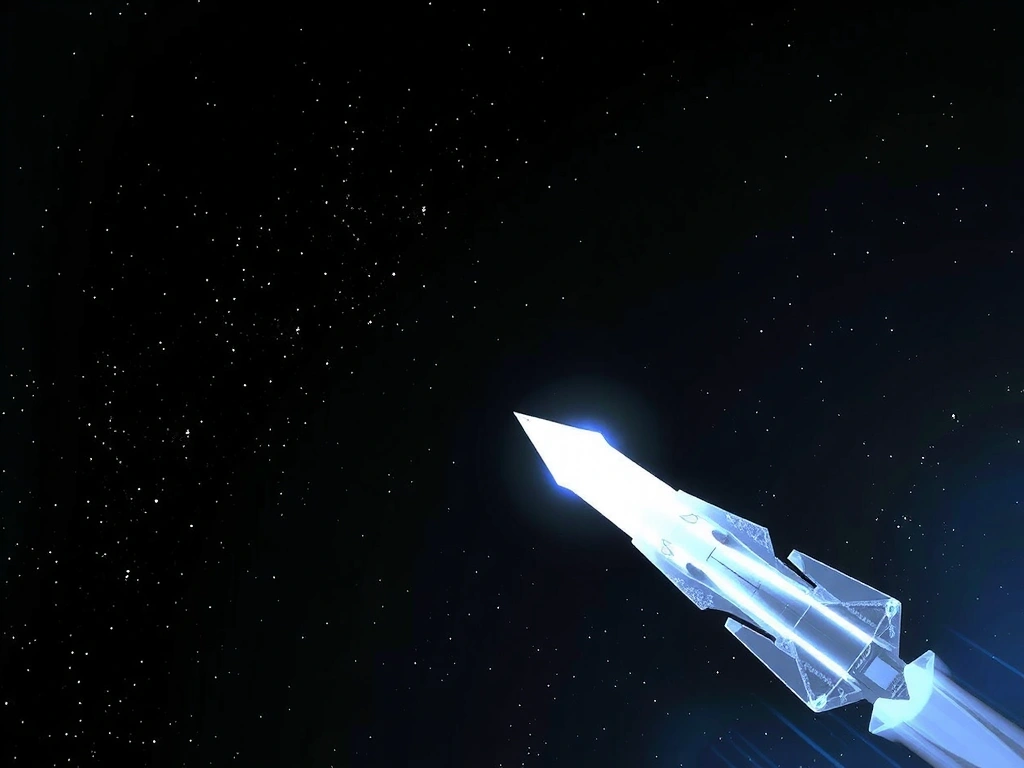
Early prototypes felt too punishing. We solved this by introducing a 'grace period' after each collision, where controls are dampened but not disabled.
"The moment I stopped worrying about shooting and started learning the orbits, I was hooked. It feels less like a game and more like a skill."
— Beta Tester, 'StellarTactics' community
The Clickeno Development Matrix
A scannable overview of our portfolio by design pillar. Use this to understand our creative range and focus.
Internal Reference
| Game Title | Primary Genre | Core Mechanic | Art Style | Clickeno Signature |
|---|---|---|---|---|
| Aether Drift | Shmup / Arcade | Gravity Slingshot | Minimalist Vector | Diegetic UI |
| Pixel Bloom | Puzzle / Zen | Single-Tap Growth | Pastel Pixel | Haptic Gratitude |
| Loom | Narrative / Puzzle | Thread Connection | Monochrome | Environmental Story |
| Echo Chamber | Audio Puzzle | Waveform Matching | Corporate Brutalism | Silent Mode Excellence |
Legend
- Diegetic UI: Interface elements that exist within the game world (e.g., a control panel on the spaceship).
- Haptic Gratitude: Rewarding taps with a positive, satisfying vibration pattern.
- Silent Mode Excellence: The game is fully playable and enjoyable with audio disabled.
Quick Filter
Sort by: Most Innovative / Most Accessible / Most Atmospheric. (Internal view)
This matrix reflects our internal design pillars. See individual case studies for full context.
How We Decide: The Constraints Framework
Every game in our portfolio operates within a set of hard boundaries. These aren't creative limits; they're the guardrails that ensure a quality, stable experience across devices.
Core logic and feel must translate identically between iOS and Android. We test on a budget device (Pixel 4a) and a high-end flagship (iPhone 15 Pro) before greenlighting art.
No game may exceed 5% sustained CPU usage on an idle screen. This forces us to be smarter with particles, AI, and physics loops.
If a game requires a specific controller or accessory, it's not in our portfolio. All titles must be fully playable with a single finger.
Scenario: The Gaming Cafe Install
Situation: A Warsaw gaming cafe needs to install 50 new titles on identical tablets for a weekend tournament. The owner has 4 hours and zero IT staff.
Clickeno's Approach: Our apps are self-contained, with no background services. The owner downloads the .apk or .ipa files, installs via USB or MDM, and they work. No accounts, no cloud sync, no hidden permissions.
The Trade-off: We sacrifice cross-device progression (save files stay local). In return, we gain offline stability and absolute privacy, which is critical for public, multi-user environments.
This scenario defines our "Install & Play" philosophy for educational and institutional partners.
Common Pitfalls & How We Avoid Them
Adding "just one more" feature during late development often breaks the core loop. We use a "Kill a Feature" rule: for every new idea added in the polishing stage, one existing idea must be removed. This keeps the experience tight.
Our first beta tests often suggest more complexity. We've learned to look for *frustration points*, not feature requests. If testers are confused, we simplify the UI. If they're bored, we adjust the pacing—not add a new mechanic.
A game that fails in silent mode fails. We test every mechanic and narrative beat with audio off. This is non-negotiable. A visual hierarchy must carry the entire experience.
Glossary: Our Take
- Diegetic UI
- We prefer it. It's immersive, but harder to scale. Balance is key.
- Haptic Feedback
- Not an add-on. It's a primary sense. We treat it as a feature, not an effect.
- Procedural Generation
- Great for replayability, risky for balance. We curate, don't unleash.
The One Question
Before shipping any game, we ask: "Is this more fun than our last title?" If the answer isn't a clear yes, we go back.
See How We Can Help You
Our portfolio shows what we can do. A conversation shows what we can do for you. We'll review your idea, your constraints, and your platform, and tell you honestly if we're the right fit.
Request a Discovery CallMon-Fri: 9:00-18:00 (CET). We typically respond within 24 hours.